


Click images to enlarge.
Features
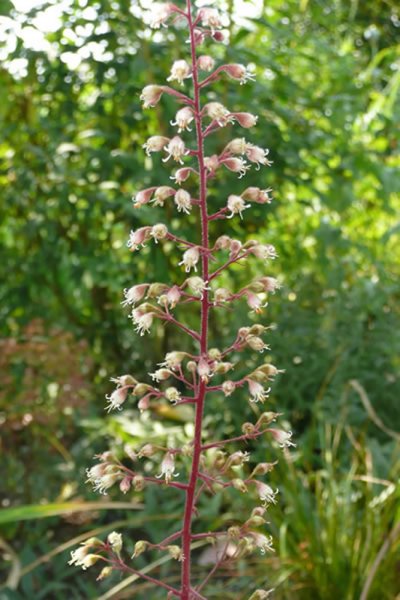
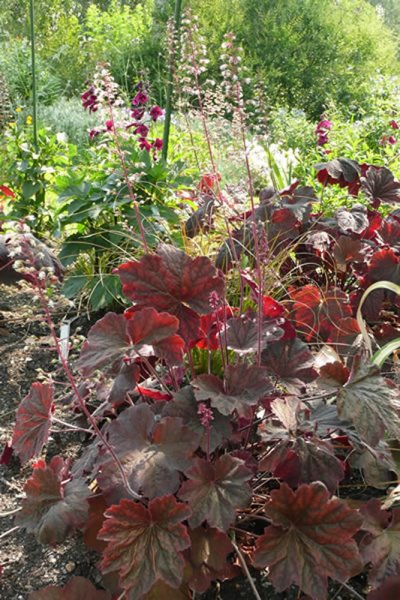
This heuchera has rich bronze/purple leaves which deepen in sun to nearly black. The creamy white summer flowers borne on tall spikes contrast with dark foliage.
What to use it for
Great in beds and borders where it makes attractive year round ground cover or edging. Can be used to underplant shrubs and roses. Grows happily in containers and the leaves last well in cut flower arrangements. Useful as a foil to brighter coloured plants.
How to look after it
The woody crown tends to rise above ground level over winter; mulching in autumn may prevent this, or lifting and replanting in spring will cover them back up. Heucheras benefit from being divided every few years to maintain their vigour and leaf colour (see ‘how to propagate it’ below).
How to prune it
Remove the spent flower spikes after flowering. If the leaves become tatty then they can be removed (cut them off at the base), retaining some foliage.
How to propagate it
Divide plants in spring or autumn, using sections from around the outside of the woody crown (which are younger) and discarding the older centre. Each section should have a good root system attached and 2 to 3 shoots.
Seeds can be sown in spring and germinated at 10°C. Seeds from cultivars may not come true to type, but you may well get some interesting variations!
Common problems
May be infested by vine weevils and leaf eelworms. Leafy gall can also be a problem.
Other useful information?
The genus Heuchera was named after the German botanist Johann Heinreich Heucher (1677–1747).
This heuchera is a hybrid of Heuchera villosa and was developed by French breeder Thierry Delabroye.
The roots of Heuchera americana (one of the original species from which many cultivars have been hybridised) was used by native North Americans as a healing herb for treating ailments including dysentery, wounds and sore throats.


